
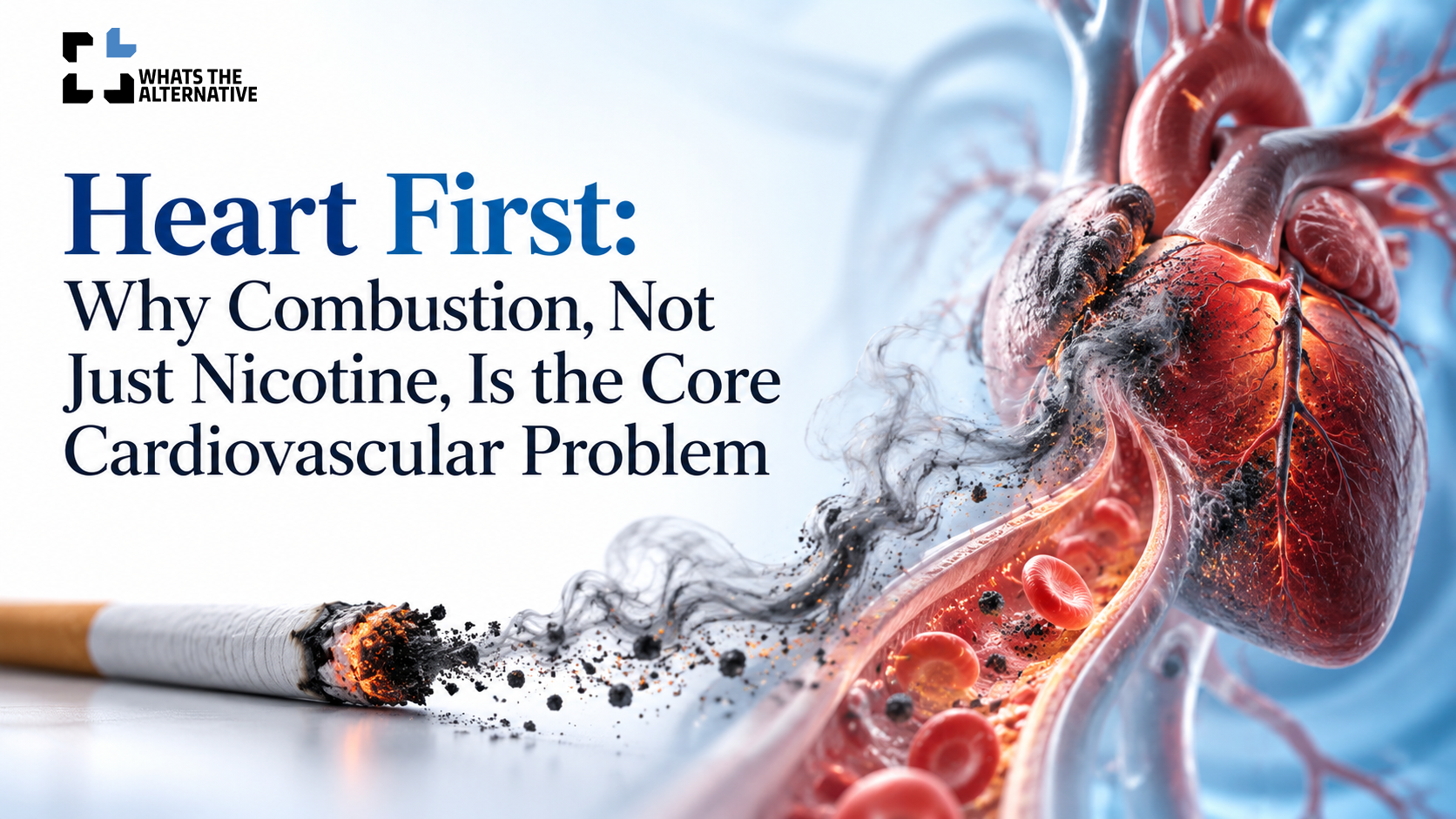
World Heart Day, observed each year on 29 September, exists to draw attention to a simple and sobering fact: cardiovascular disease remains the leading cause of death worldwide. Most of the conversation around it focuses on blood pressure, cholesterol, diet, and exercise, and rightly so. But tobacco belongs in that conversation more prominently than it usually appears, and the specific way it harms the heart is worth understanding precisely, because that precision is what makes harm reduction logic make sense.
As October opens and the attention of World Heart Day carries forward, this article asks a focused question: what is it about smoking that damages the cardiovascular system, and what does that tell us about the choices available to an adult who currently smokes?
How Cigarette Smoke Reaches the Heart
The cardiovascular system is unusually exposed to cigarette smoke. With every inhalation, combustion products pass through the lungs into the bloodstream and reach the heart and blood vessels within seconds. Among them is carbon monoxide, which binds to haemoglobin far more readily than oxygen does and so reduces the oxygen the blood can carry, forcing the heart to work harder to supply the body. Fine particulate matter and oxidant chemicals irritate and inflame the lining of blood vessels, the endothelium, which is central to keeping arteries flexible and healthy.
Over time, this repeated injury promotes the build-up of fatty deposits in artery walls, makes blood more prone to clotting, and stiffens vessels. These are the underlying processes behind heart attacks, strokes, and peripheral artery disease. Smoking does not cause these conditions through a single dramatic event. It contributes to them through years of repeated, cumulative exposure.
The Role of Nicotine — and Why It Is Not the Whole Story
Nicotine is not harmless to the cardiovascular system. It temporarily raises heart rate and blood pressure, and it sustains the dependence that keeps people smoking. That is a genuine consideration, particularly for anyone who already has heart disease. But the broader scientific picture is that the greatest cardiovascular damage from smoking is driven by the products of burning tobacco, not by nicotine alone. This is why the health risk of nicotine delivered through a non-combustible route is understood to be considerably lower than that of smoking, though not zero.
Holding both of those statements together is the honest position. Nicotine has effects worth taking seriously. Combustion is the larger problem. An adult who understands both is better equipped to weigh their options than one who has been told either that nicotine is harmless or that all nicotine is equivalent to smoking.
Why This Matters for Harm Reduction
For an adult who smokes and is not yet ready or able to stop using nicotine entirely, the most heart-relevant question is not simply whether they use nicotine. It is whether they continue to expose their cardiovascular system to combustion products every day. Removing combustion removes carbon monoxide and a large share of the particulate and oxidant burden that damages vessels. That is the core cardiovascular logic of tobacco harm reduction, and it is why accurate information about the difference matters so much.
Complete cessation of all tobacco and nicotine use remains the best outcome for heart health, and nothing here changes that. But for adults who are not there yet, the difference between continuing to smoke and moving away from combustion is a meaningful one for the heart.
A healthy heart is built on many things. Not breathing smoke into it every day is one of the most direct of them.
On World Heart Day, many people reflect on what they could do for their heart. What is one thing you have learned about tobacco and your heart that you wish you had known earlier? Share below.