
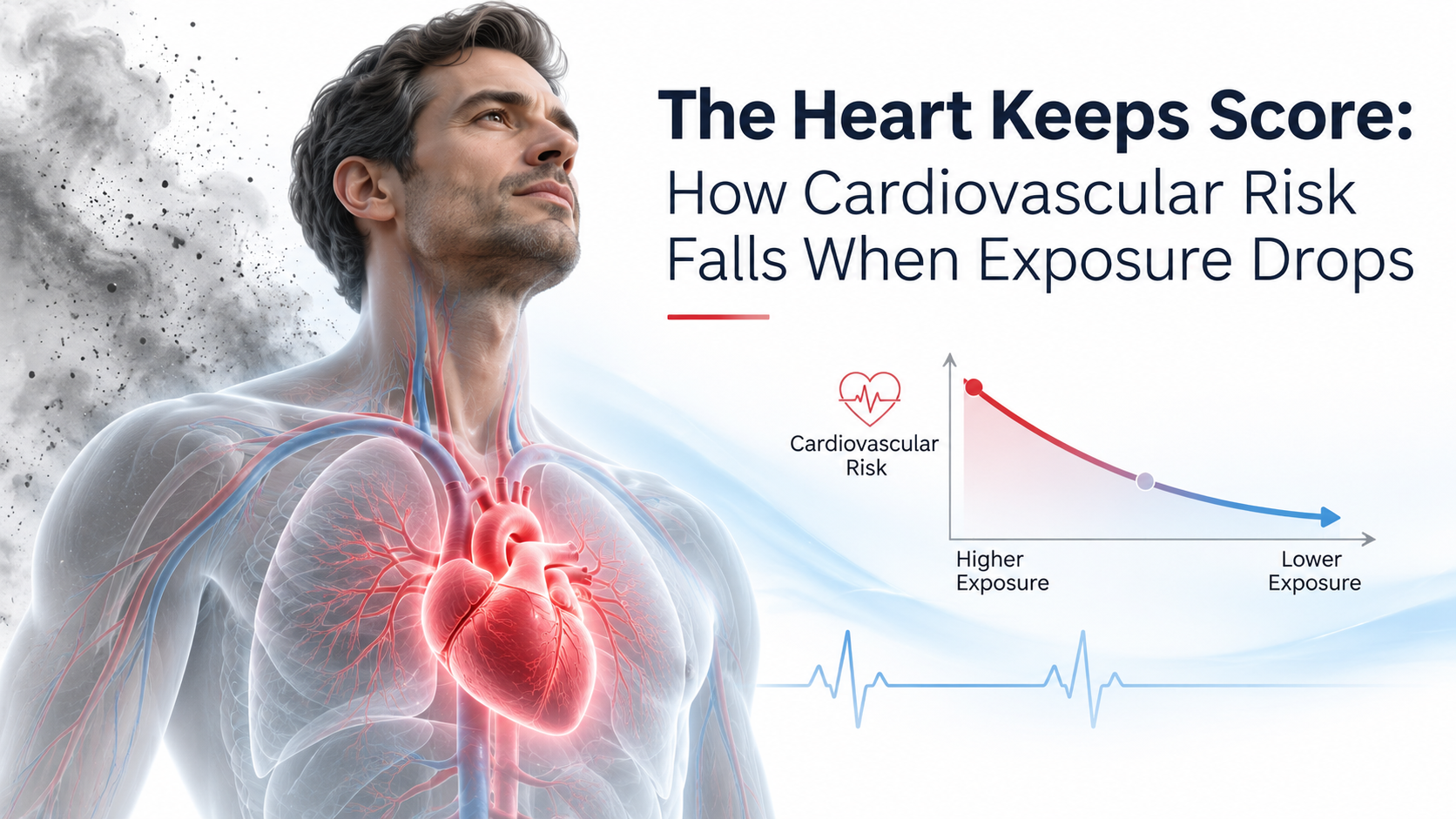
One of the most persistent beliefs among adults who have smoked for many years is that the damage is already done, and that changing anything now makes little difference. It is an understandable feeling, and it is also one of the most discouraging and least accurate ideas in tobacco and heart health. The cardiovascular system has a remarkable capacity to respond when the harmful exposure is reduced, and much of that response begins sooner than people expect.
The Early Changes
Some of the effects of smoking on the cardiovascular system are reversible within a short time. Carbon monoxide in the blood falls once smoking stops, because the body clears it relatively quickly, which allows blood to carry oxygen more effectively. Heart rate and blood pressure, which are temporarily raised by smoke exposure, begin to settle. Circulation and the function of blood vessel linings begin to improve over the following weeks and months.
The Longer Trajectory
Over a longer period, the risk of heart attack and other cardiovascular events falls substantially among people who stop smoking. Large studies consistently show that the excess risk declines over the first years after stopping, and that over a longer period the risk of former smokers moves toward that of people who have never smoked. The earlier the exposure is reduced, the more of that benefit is available. But benefit is also seen in people who stop in middle age or later, which is the point most worth communicating to long-term smokers.
What This Means for Harm Reduction
The same logic applies in proportion to exposure. Cardiovascular harm from smoking is driven largely by the products of combustion, so a sustained, complete move away from combustion reduces that exposure, even when nicotine use continues. The evidence on long-term outcomes for non-combustible alternatives is still developing, and the recovery curve is best documented for stopping smoking altogether. But the underlying biology supports the idea that the heart responds to reduced exposure, and that earlier is better than later.
Why Timelines Help
Behavioural research suggests that people are more likely to persist with a change when they can see where it leads. Concrete, near-term markers, such as easier breathing on stairs, better stamina, and steadier energy, make a long-term benefit feel real. Framing progress as a trajectory, rather than as a pass-or-fail test, keeps people engaged even when the path is uneven.
A Word of Realism
None of this means that past exposure disappears. Some risk remains for former smokers, and anyone with symptoms such as chest pain, breathlessness, or palpitations should seek medical care without waiting. Recovery curves describe averages, not guarantees. What they offer is a reason for hope that is grounded in evidence, not in wishful thinking.
The heart keeps score, but it also gives credit. Every period of reduced exposure counts in the direction you want.
What would it mean to you to know the heart begins to respond sooner than you expected? Share your thoughts below. Your experience helps shape what we cover, and the WTA community survey is still open if you would like to contribute.