
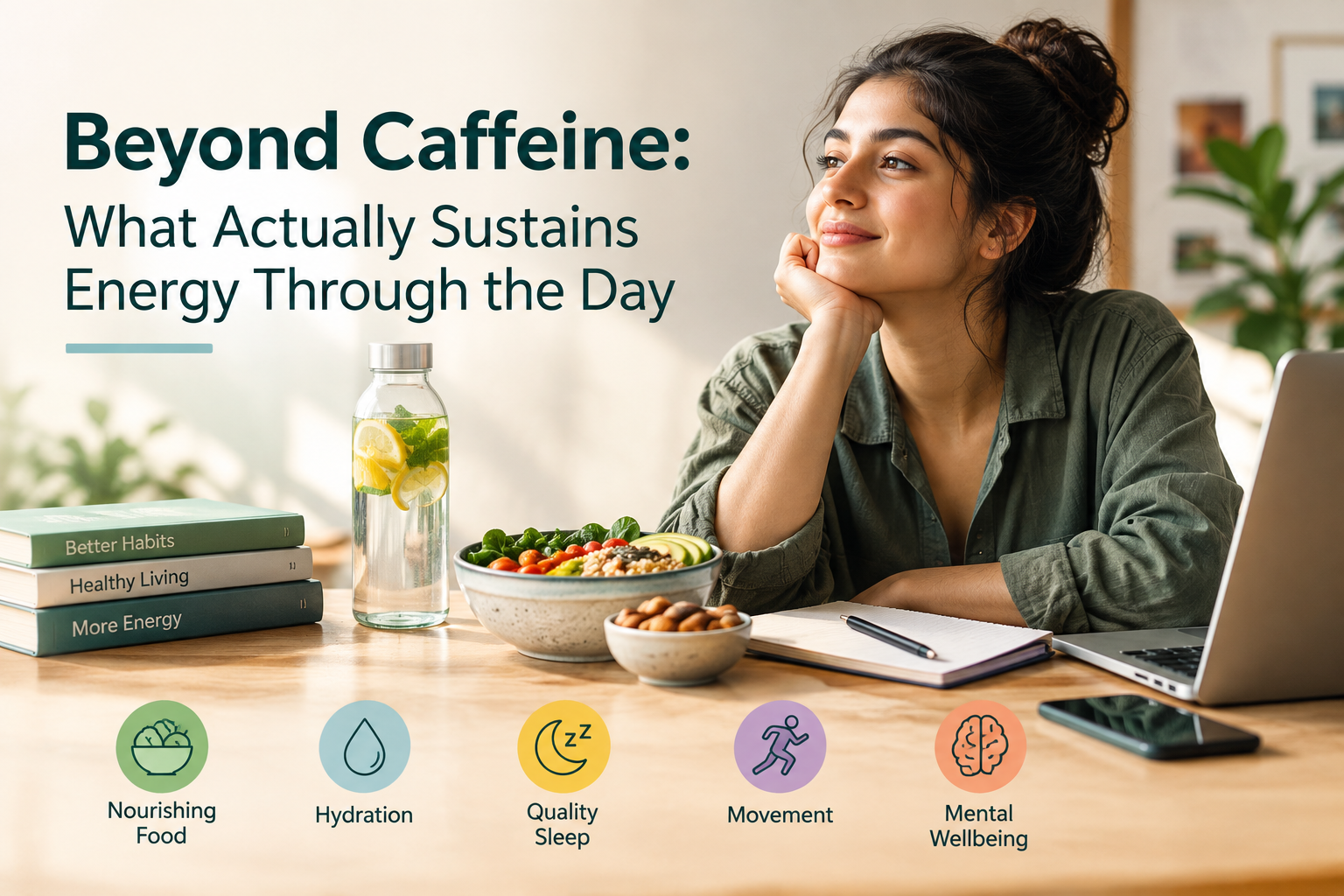
Ask someone how they manage an energy dip in the middle of the day, and the answer is almost always some version of caffeine — more tea, another coffee, an energy drink. Caffeine works, in a narrow sense: it blocks adenosine receptors and produces a genuine, measurable alertness effect. But treating caffeine as the primary tool for sustaining daily energy misses most of what actually determines how energetic a person feels across an ordinary day — and it can quietly make the underlying problem worse.
What Energy Actually Depends On
Sustained energy is less a single variable and more the output of several systems working together: blood glucose stability, hydration status, sleep quality from the night before, and the basic rhythm of activity and rest across the day. When any one of these is off, the felt experience is often identical — fatigue, difficulty concentrating, a craving for stimulation — regardless of which underlying system is actually responsible. This is part of why caffeine feels like it works for almost any kind of tiredness: it masks the symptom without addressing whichever of these systems is actually depleted.
The Hydration Connection Is Underrated
Mild dehydration — a level that doesn't produce obvious thirst — measurably impairs concentration, mood, and perceived energy. In hot, high-humidity environments, and among people who primarily drink tea or coffee rather than water, low-grade dehydration is common and frequently mistaken for ordinary tiredness or a need for more caffeine. The fix, in many cases, is not more stimulation. It is water, consistently, across the day rather than in a single corrective burst.
Blood Glucose Swings and the Afternoon Crash
A large, refined-carbohydrate-heavy lunch produces a sharp rise in blood glucose followed by an equally sharp fall — the mechanism behind the familiar early-afternoon energy crash. Meals that combine protein, fibre, and complex carbohydrates produce a flatter, more sustained glucose curve, and correspondingly steadier energy, without requiring any change in total calories or a restrictive approach to eating.
Why More Caffeine Can Backfire
Caffeine has a half-life of roughly five to six hours, meaning a mid-afternoon coffee is often still substantially active in the system at bedtime — quietly degrading sleep quality even when it doesn't prevent falling asleep outright. This creates a self-reinforcing cycle: poor sleep increases next-day fatigue, which increases caffeine intake, which further disrupts the following night's sleep. Breaking this cycle usually requires addressing the sleep debt directly rather than simply managing around it with more stimulation.
A More Sustainable Approach
None of this requires eliminating caffeine, which remains a reasonably safe and effective tool in moderation. It requires treating it as one input among several rather than the default first response to every dip in energy — checking hydration, considering the composition of the last meal, and being honest about accumulated sleep debt before reaching for another cup.
Energy is rarely a single-cause problem, which is exactly why a single-tool solution — more caffeine — so often falls short. The more durable fix is usually less dramatic: water, a steadier meal, and sleep that's actually been paid back.
What's your go-to move when energy dips midday — and has it actually been working? Share below.