
A common mistake in conversations about tobacco and heart health is to treat the risk as a single thing. Last week's article described how combustion drives much of the cardiovascular damage from smoking. This week asks a more careful follow-up question: if someone moves away from burning tobacco, what actually changes for the heart, and what stays the same? Answering it honestly is more useful than either reassurance or alarm.
What Changes When Combustion Is Removed
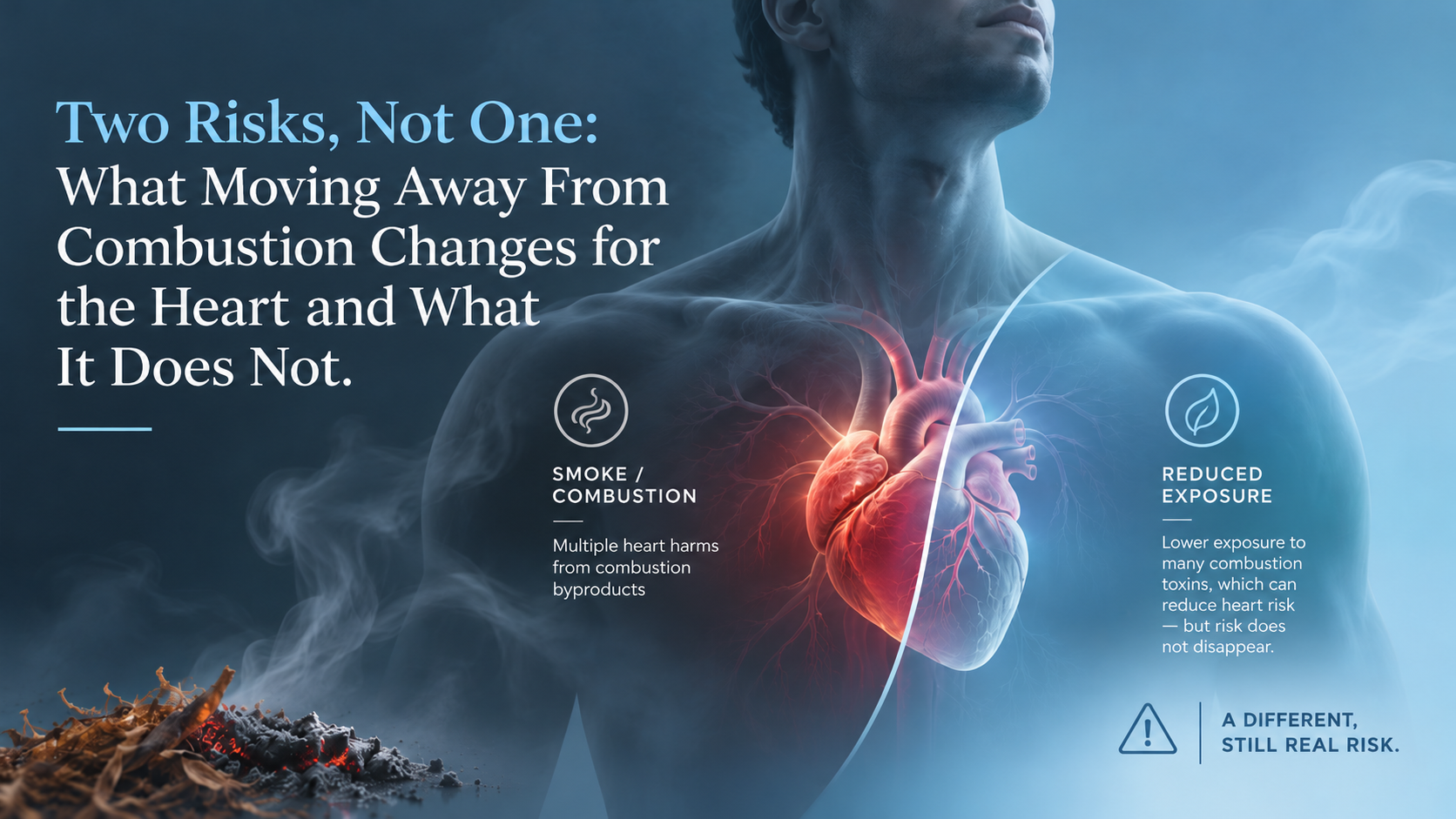
When tobacco is not burned, the heart and blood vessels are no longer exposed to carbon monoxide from the cigarette, and the exposure to fine combustion particles and many of the oxidant chemicals in smoke falls substantially. These exposures are among the main drivers of vessel inflammation, clotting tendency, and reduced oxygen delivery. Studies that measure biomarkers of exposure and vascular function in people who switch completely away from cigarettes have generally found improvements in several of these markers, which is consistent with the underlying mechanism.
It is important to describe this carefully. Improvements in markers of vascular function are encouraging, and they fit with what we understand about combustion. They are not the same as long-term outcome data showing fewer heart attacks and strokes, which takes many years of follow-up to establish. The honest summary is that the direction of the evidence is favourable, and that long-term population evidence continues to accumulate.
What Does Not Change
Nicotine continues to temporarily raise heart rate and blood pressure, and nicotine dependence continues. For an adult with a healthy cardiovascular system, the evidence suggests this is a considerably smaller concern than the burden of smoking. For an adult who already has heart disease, uncontrolled high blood pressure, or a history of heart attack or stroke, it is a question that deserves a conversation with a doctor rather than a general rule. Nobody should read a general article as a substitute for that conversation.
Two further points matter. First, switching completely matters more than switching partly. Continuing to smoke some cigarettes while also using an alternative maintains much of the combustion exposure, which limits the cardiovascular benefit. Second, none of this is an argument for people who do not currently smoke or use nicotine to start. The case for harm reduction is a case for adults who currently smoke, not for anyone else.
“Public health should focus on preventing tobacco initiation, supporting complete cessation, and reducing harm among adults who are unable to quit. Clear communication of both the potential benefits and limitations of alternative products is essential.”
Prof Zafar Iqbal Chaudhry – Physician
Why Getting the Distinction Right Is Practical
People make better decisions when they understand which risk belongs to which part of the product. An adult who believes that all nicotine-containing products carry the same cardiovascular risk as smoking has little reason to consider moving away from cigarettes. An adult who believes alternatives are completely risk-free may overlook the effects of nicotine on heart rate and blood pressure, or fail to mention their use to a doctor who is managing their heart. Both beliefs are inaccurate, and both lead to worse decisions.
In Pakistan, where many adults rely on informal sources for health information and where routine cardiovascular screening is not universal, a clear, balanced explanation of these two separate risks is especially valuable.
Honest harm reduction holds two ideas at once: that moving away from combustion matters a great deal for the heart, and that nicotine is still not nothing.
Has anyone ever explained to you the difference between the risk from smoke and the risk from nicotine? Tell us below, and if you have not yet taken part in the WTA community survey, we would value your experience.