
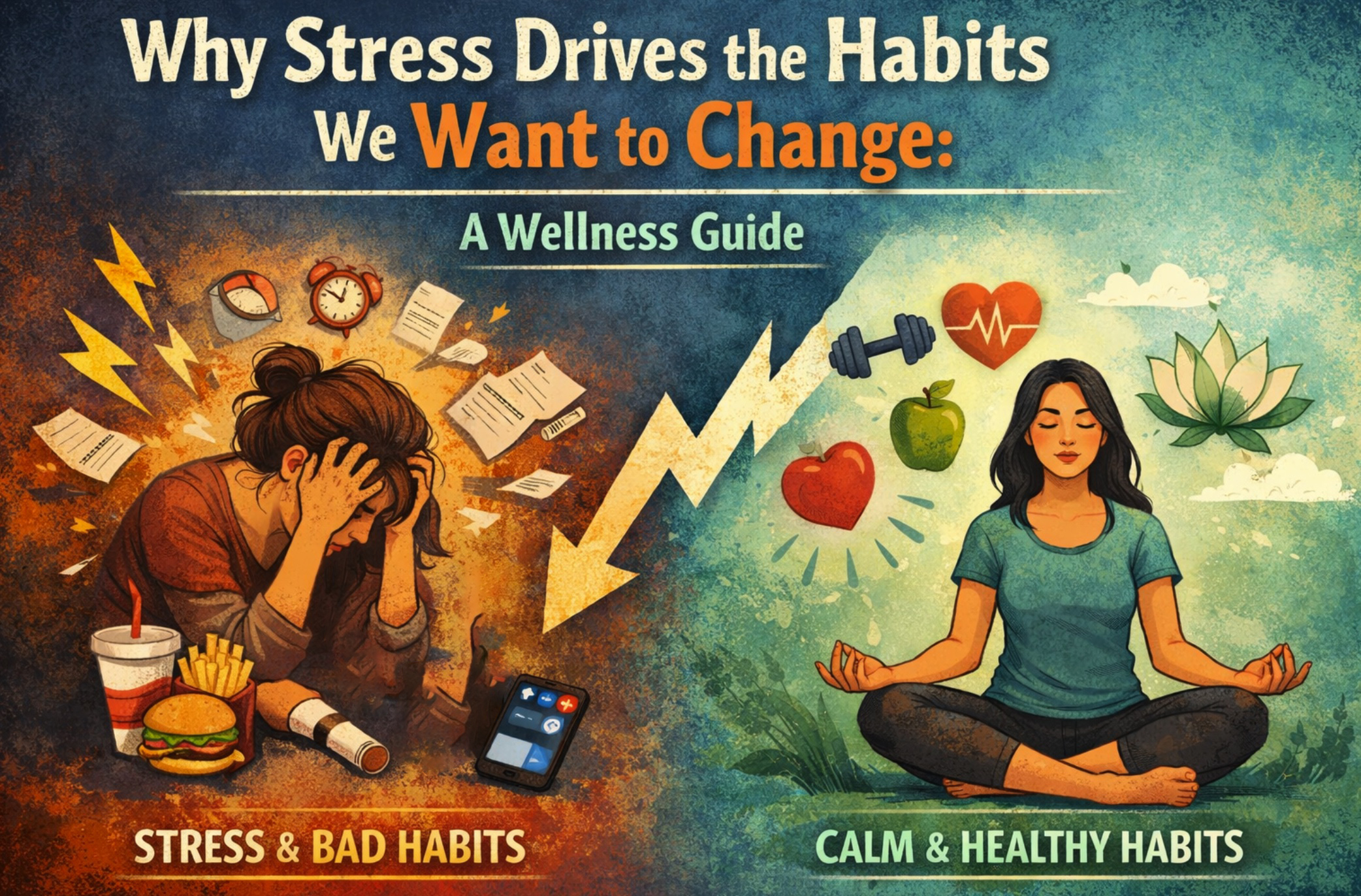
In the fast-paced rhythm of life in Karachi, where economic pressures, urban congestion, and family obligations converge, stress often feels like an uninvited companion. For many Pakistanis, this tension manifests in habits we wish to alter: reaching for comfort foods, endless scrolling, or tobacco as a quick balm. With mental health challenges affecting 10-16% of the population and tobacco serving as a common crutch for nearly one in five adults, understanding this dynamic is key to fostering wellness. In this article, we will delve into why stress propels these patterns, drawing from diverse global and local sources. This exploration builds empathy, normalising coping while subtly introducing harm reduction logic.
The Biology and Psychology of Stress-Fueled Habits
Stress isn't merely emotional; it's a physiological force reshaping our behaviours. When faced with threats—real or perceived—the body's fight-or-flight response floods us with cortisol and adrenaline, priming us for survival. In modern contexts, like Pakistan's inflation spikes reaching 29.7% in 2023 or political uncertainties, this chronic activation hijacks the brain's reward system, craving instant relief. Nicotine, for instance, delivers a rapid dopamine hit, making tobacco a go-to for many amid the daily grind.
But why do we really reach for these habits? At its core, we're seeking a release from the building anxiety or arousal—a way to discharge the pent-up tension. Yet, behaviours like binge eating, nail biting, or smoking often don't truly release it; they suppress or distract from the discomfort temporarily. Renowned trauma expert Dr Peter Levine, in "Waking the Tiger," explains that unresolved stress gets "trapped" in the body, leading to repetitive actions as attempts to self-regulate. A 2024 study from the University of Cambridge on body-focused repetitive behaviours (BFRBs) like nail biting confirms this: These habits provide momentary sensory distraction, reducing perceived anxiety by shifting focus, but fail to process the underlying emotion, often leading to a rebound effect.
Binge eating follows a similar pattern: A 2023 meta-analysis in the Journal of Eating Disorders highlights how it acts as emotional avoidance, suppressing anxiety through sensory overload, but exacerbating guilt and stress cycles afterwards. In Pakistan, a 2025 qualitative analysis in Larkana, Sindh, revealed stress from peer influence and socioeconomic factors driving smoking and similar suppressants, amplifying dependency in low-income groups without resolving root tensions.
Habit formation expert Wendy Wood, in "Good Habits, Bad Habits," describes this as automated responses: Stress cues trigger suppression tactics because they're quick and
familiar, but they don't metabolise the anxiety, leaving it to simmer and resurface stronger. Judson Brewer, MD, PhD, a mindfulness researcher and author of "Unwinding Anxiety," adds that curiosity about the urge, asking "What am I really feeling?", can shift from suppression to true release, breaking the loop by allowing emotions to flow through.
Locally, a 2023 cross-sectional study from Nikki, Benin (with parallels to South Asian contexts), found stress and cultural norms fueling smokeless tobacco use, underscoring how environmental stressors exacerbate vulnerabilities. In South Asia, where mental health stigma persists, tobacco often doubles as a social lubricant, per a 2022 NIH review on cultural influences among migrants. Subtly, THR principles apply here: Recognising the suppression dynamic encourages exploring less harmful alternatives, like nicotine pouches over combustibles, to manage cravings without escalating risks, while addressing the need for genuine release through wellness practices.
Building Empathy: Normalizing Coping in a High-Stress World
Shame around habits only intensifies stress, creating a feedback loop. Dr Kristin Neff, pioneer of self-compassion research and author of "Self-Compassion," demonstrates that treating ourselves kindly boosts resilience by 20-30%, easing the grip of maladaptive behaviours. In Pakistan, where only one psychiatrist serves 100,000 people, self-reliant coping is common, yet often leads to tobacco as an accessible escape.
Irvin Yalom, in "The Gift of Therapy," reflects that suppressing emotions through habits like overeating or biting nails stems from a fear of fully feeling anxiety, but empathy allows us to sit with it, transforming suppression into integration. A 2023 PMC pilot trial on mindfulness-based relapse prevention (MBRP) for smoking supports this, showing reductions in affective distress and comparable efficacy to cognitive behavioural therapy (CBT). Locally, a 2025 study on rural Pakistan's smokeless tobacco epidemic highlighted stress-related coping as a core driver, with familial patterns and peer influence compounding the issue.
Cultural contexts matter: In South Asia, tobacco ties to identity and social bonding, per a 2021 PLOS One analysis across five countries, where 25% male prevalence links to socioeconomic stressors. Empathy shifts the narrative—habits aren't weaknesses but survival tools. This opens doors to THR-inspired wellness: Gradually substituting harmful routines with safer ones, like herbal teas or walks, fosters sustainable change without self-blame, moving from mere suppression to authentic emotional release.
Environmental and Lifestyle Intersections: Broader Impacts on Wellness
Stress-driven habits ripple outward, affecting environments and communities. In Pakistan, tobacco cultivation depletes soils and water, while urban pollution—worsened by traffic—heightens respiratory stress, per a 2022 FAO report. A 2024 systematic review in Public
Health Nutrition linked smokeless tobacco to malnutrition via altered taste and reduced fruit/vegetable intake, a concern in food-insecure regions.
Tara Brach, in "Radical Acceptance," emphasizes how suppressing anxiety through habits disconnects us from our bodies, advocating presence-based practices for release. In Pakistan, integrating traditional mindfulness (e.g., Sufi meditation) with modern wellness could counter this, as suggested in a 2025 Conversation article on evidence-based stress management.
Globally, Iceland's model combines stress reduction with community wellness, yielding lower disease burdens. For Pakistan, a 2023 NIHR initiative on smokeless tobacco harm reduction in South Asia calls for tailored interventions, blending education with community support to address cultural norms. Environmentally, opting for biodegradable alternatives reduces waste, aligning lifestyle shifts with sustainability, and encouraging habits that release rather than suppress tension.
Practical Steps: Evidence-Backed Paths to Empathetic Change
Transforming habits starts with understanding. Here's a diversified, research-supported roadmap:
- Map Your Stress Cues: Journal triggers, as recommended by the American Psychological Association (APA), which notes that strong social support enhances resilience.
- Cultivate Self-Compassion: Practice Neff's exercises to cut shame, improving emotional regulation and shift from suppression to release
- Incorporate Mindful Movement: Brewer suggests curiosity-based walks; studies show they slash cravings by 25% by allowing anxiety to dissipate naturally.
- Build Support Networks: Yalom stresses therapy's role; in Pakistan, forums like Tobacco-Free India's offer peer insights for processing emotions
- Explore Gradual Alternatives: For tobacco users, THR tools like pouches provide nicotine without smoke, per a 2022 ScienceDirect review on South Asian policies. Pair with Brach's acceptance practices for lasting wellness.
where stress peaks, these steps empower. A 2024 Sage Journals review advocates holistic interventions, combining lifestyle mods with therapies for chronic stress, promoting true release over suppression. Stress reveals our humanity; responding with empathy unlocks change. In Pakistan's vibrant yet challenging landscape, this approach nurtures wellness beyond habits.